The meal, and your visit
Chanko-nabe: what wrestlers eat in Kyoto
What chanko-nabe is, why wrestlers eat it, how the club serves it and what to ask about vegetarian, vegan and allergy needs before you book.
Reserve your seats for the sumo show ↗Quick answer
Chanko-nabe is the one-pot stew sumo wrestlers eat in huge quantities. At Kyoto Sumo Club it is the centre of an all-you-can-eat, all-you-can-drink table, served in a light salt-based broth. Vegetarian, vegan and gluten-free meals are a limited menu you must request at least two days ahead, and halal or severe-allergy needs may not be possible. Arrive at least 20 minutes before your show.
The club's meal at a glance
| Question | Answer |
|---|---|
| Is it spicy? | No, the club says |
| Is the broth meat-free? | No, it uses chicken broth and bonito |
| Vegetarian meal? | Limited menu, request 2 days ahead |
| Halal or severe allergy? | The club may be unable to help |
What chanko-nabe is
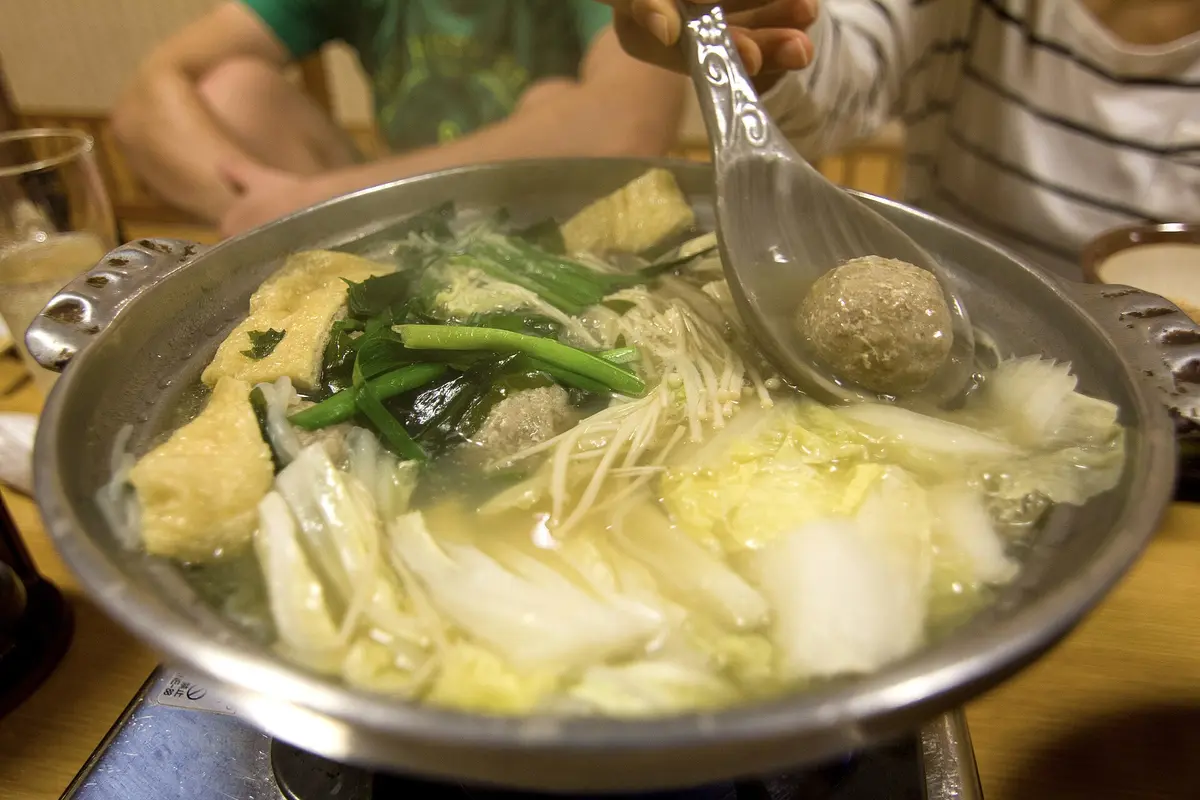
Chanko-nabe, also called chanko or sumo stew, is a nabemono: a one-pot dish kept hot at the table, where diners pick out what they want. It has no fixed recipe. The base is dashi or chicken broth with sake or mirin, and the bulk is protein such as chicken, fish balls or tofu, plus vegetables like daikon and bok choy. Wrestlers eat it in vast quantities while trying to gain weight. Nabemono are typically enjoyed on cold days or in winter, and chanko-nabe is served with more ingredients than most because it was developed to help wrestlers gain weight.
What do sumo wrestlers eat?
Beyond the stew, Wikipedia says modern wrestlers typically eat copious rice, often five to ten bowls per meal, and drink beer to raise their calorie intake. The stew itself is protein-rich. Despite their size, active wrestlers carry unusually low levels of visceral fat, which researchers link to intense daily training and a diet low in sugar and processed food. In a stable, chanko is served by seniority: senior wrestlers and guests of the stable choose first, and junior wrestlers get what is left.
Life around the pot in a stable
Wikipedia describes professional wrestlers as living in communal training stables called heya, where all aspects of daily life, from meals to dress, are set by tradition. Junior wrestlers get up earliest to train, and may have chores such as helping to cook lunch. That is why chanko is as much a way of living together as a diet: one big pot, cooked by the stable, shared in a fixed order. The club's show borrows the pot, and leaves out the rest of the routine.
Why chicken at tournaments
Chanko-nabe served during tournaments is made exclusively with chicken, because a wrestler should always be on two legs, like a chicken, and not on all fours. Away from tournaments cooks use whatever suits them. Chanko is also a popular restaurant dish, often served in restaurants run by retired wrestlers who specialise in it. The club says its dishes are supervised by a chef who worked for many years in a real sumo stable.
The club's chanko-nabe
The club's signature chanko has a light salt-based broth, made by blending three dashi: chicken broth, kelp and bonito flakes. That matters if you avoid fish, since the standard broth contains bonito. The club's FAQ says the broth is not spicy, so it suits children, and that you can add seven-spice seasoning or chili oil for heat. The all-you-can-eat table also carries a wide range of other dishes, and the drinks are unlimited too.
How the table works
Chanko is shared from the pot. The club's FAQ suggests tasting the broth first, serving yourself with chopsticks and alternating with the side dishes. It says the meal can end with noodles or rice porridge cooked in the remaining broth, which matches Wikipedia's note that leftover broth is later used for noodles. The club also says you may get to add ingredients to the pot yourself. Solo travellers are welcome, and the club says smaller hot pots or individual sets may be offered, so ask when you reserve. Food and drink are both unlimited, so you set the pace, and the meal doesn't stop when the show starts.
Dashi: why the broth has fish in it
Dashi is a family of Japanese stocks, and the most common form is a simple broth made by heating kelp and shavings of bonito, a preserved, fermented skipjack tuna. Chanko-nabe's base is dashi or chicken broth. The club blends chicken broth, kelp and bonito flakes, so the standard pot isn't vegetarian, and it isn't suitable for anyone avoiding fish either. If either applies to you, request the vegetarian version when you book, not at the table. Wikipedia notes that kelp and bonito together create a synergy of umami, the savoury depth these broths are built on.
Vegetarian, vegan, gluten-free and allergies
Tell the club about dietary needs when you book. Vegetarian, vegan and gluten-free meals are a limited menu and must be requested at least two days ahead. The club's FAQ says a vegetarian chanko is possible with advance reservation, built on a vegetarian broth, and that some allergies, such as wheat, may be handled by leaving an ingredient out. Its menu page warns that it may be unable to meet halal or severe-allergy requests, and says guests are welcome to bring their own food. If dietary needs aren't mentioned in advance, the club says serving may take longer.
Getting there and timing
The club is on the fifth floor of the Passaggio building on Shinkyogoku, in Nakagyo Ward. Its site gives about three minutes on foot from Kyoto-Kawaramachi Station and about seven from Gion-Shijo Station. The booking describes the venue as the fifth floor of the building with an Animate store: from the ground floor, walk towards the Montbell store and the lifts are on your left. Arrive at least 20 minutes before your show; the club says entry opens 30 minutes before each session. The club lists irregular closing days, so rely on the booking calendar. The club runs several sessions through the day and into the evening, and the booking calendar shows which are on sale for your date.
Language, children and seating
The commentary is in English and covers sumo rules and techniques for people who have never watched a bout. The show is made for adults and children. Babies under 1 year get no seat, meal or souvenir. Pushchairs and wheelchairs can't go in the show area; the club has a storage area, and wheelchair users should contact it first. You may be seated with other guests, so don't expect a private table. Friends who booked separately can add names or booking numbers in the comments and arrive together. Photos and videos are welcome during the show; live-streaming it, or posting the whole show online, is not allowed.
Read next: Families, school groups and friends booking separately
Who this isn't for
Skip this if you need a halal meal or have a severe allergy, because the club says it may be unable to accommodate either. Skip it if you want a quiet dinner: the show runs alongside the meal, the room is lively and you may share a table. Babies under 1 year get no seat or meal. And if you only want to eat chanko-nabe without a show, a chanko restaurant is a better fit; this booking is a show with a meal.
Frequently asked questions
What is chanko-nabe?
A stew cooked in one pot and eaten in vast quantities by sumo wrestlers trying to gain weight. There is no fixed recipe: the base is dashi or chicken broth, with protein such as chicken, fish balls or tofu, and vegetables.
What do sumo wrestlers eat?
Chanko-nabe, usually with a lot of rice, often five to ten bowls per meal, and beer, according to Wikipedia. The aim is to raise calorie intake alongside hard daily training.
Why is tournament chanko-nabe made with chicken?
Chanko-nabe served during tournaments is made only with chicken, because a wrestler should stay on two legs like a chicken, not on all fours.
Is the club's chanko-nabe spicy?
No. The club says its salt-based broth is not spicy and suits children. You can add seven-spice seasoning or chili oil if you want some heat.
Can I eat vegetarian or vegan at Kyoto Sumo Club?
Yes, as a limited menu. Request it at least two days before your visit, ideally when you book. The standard broth uses chicken broth and bonito, so the club prepares a vegetarian broth instead.
Is the meal all you can eat?
Yes. The meal is all you can eat and drink, built around chanko-nabe with a wide range of other dishes.
Sources